
What to eat in Ogliastra: culurgiones, Cannonau and authentic Sardinian food
by Roberto Demurtas · Host of Villa Pelau · updated on 14 July 2026
The typical Ogliastra menu, told by a local: PGI culurgiones, roast suckling pig, pistoccu bread, rare cheeses and Sardinian desserts.
If Ogliastra is a land of centenarians, its cuisine has a lot to do with it: essential dishes, local ingredients, recipes born for pastoral life and passed down without too many compromises. In this article I'll walk you through what to eat in Ogliastra, a full traditional menu from starter to dessert, the way I'd serve it to a friend — with the Sardinian names and everything you need to tell authentic Sardinian food from the tourist version.
A note on pronunciation before you sit down at the table: in Sardinian, x is pronounced like a soft g. Casu axedu sounds like "casu agedu", civraxiu becomes "civargiu" — the most famous word with this quirk is su nuraxi, "su nuragi", the nuraghe.
Starters: cured meats and cheeses of the land
It starts the way it does in every Ogliastra home: prosciutto, dry sausage and guanciale are the most common starters, alongside a good pecorino or goat's cheese. But the most typical — and the least known outside the island — is casu axedu: a soft, almost creamy cheese, looser than a classic pecorino, made from raw goat's milk left to curdle for 24 hours at a mild temperature. The name literally means "sour cheese", for its fresh, slightly tangy note; it's recognised among Sardinia's Traditional Agri-Food Products and keeps in the fridge.
First courses: culurgiones, PGI pride
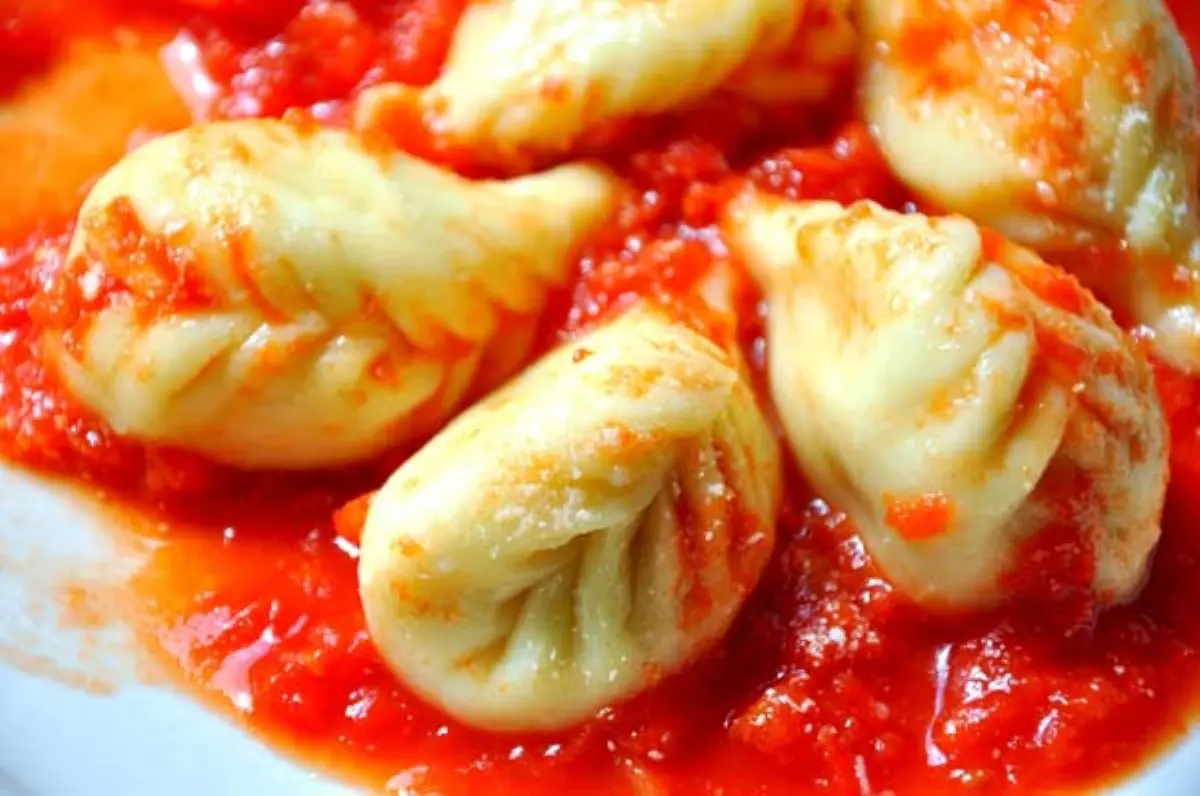
This is where we enter sacred ground. Culurgiones are Ogliastra's signature dish: fresh pasta parcels sealed by hand "a spighitta", with a pleat that resembles an ear of wheat — a gesture handed down through generations of Ogliastra women. Since 2016, Culurgionis d'Ogliastra have held the European PGI mark (Protected Geographical Indication), protecting a recipe that here is pure identity.
The filling is based on potato, fìscidu (or casu 'e vita, as it's called in several villages: it's casu axedu aged further in brine), oil, mint and garlic — at least in the version from Jerzu and the Tacchi villages. Other villages use a fried onion base instead: I prefer the garlic version, though that might just be honest local pride — I'd suggest trying both and picking a side.
The same filling turns up in coccoi prenas — literally "stuffed bread" — small filled pastries that can also be made with civraxiu, the typical potato bread. A local secret: culurgiones and coccoi prenas keep beautifully and are the perfect lunch to bring along for a full day at the beach.
Among the simpler first courses, also try malloreddus — Sardinian gnocchetti — with wild boar ragù, and fregola with seafood.
Main courses: suckling pig, no frills
The typical Sardinian dinner has one star: roast suckling pig. Locals just call it that, or at most porceddu; the media mangling "porcheddu" can stay in the marketing brochures. A truly good suckling pig is easier to find in Ogliastra than almost anywhere else, but that very reputation draws commercial festivals with few actual local piglets, aimed at people who aren't from here.
My advice: check that the festival has an established history — like the one in Baunei — or ask your host to put you in touch with a small local breeder. I always tell my guests the same thing: at Villa Pelau, there's no shortage of spit, barbecue and firewood.
The other great main course of the tradition is pecora in cappotto, mutton slow-boiled with potatoes and onions: the shepherds' dish for cold days.
Bread: pistoccu, carasau and edible art
In Ogliastra, bread gets a chapter of its own. There's potato civraxiu, there's hand-decorated pasta dura — for these edible works of art, the best bakers are in Tertenia — and then there are the two historic breads born to last, perfect for shepherds on transhumance: pistoccu and pane carasau.
Both go through a double bake, but don't confuse them: carasau is a wafer-thin disc, about a millimetre, crisp, good even fresh with a drizzle of oil and a pinch of salt — that's when it becomes pane guttiau. Pistoccu is thicker, 3–4 millimetres, rustic and dense: in my view it's best moistened and left to rest a few minutes, perfect for spreading with melted pecorino.
For the more adventurous palate
Two specialities that show just how faithful this cuisine has stayed to its pastoral roots — both recognised among Sardinia's Traditional Agri-Food Products.
Su caggiu, kid rennet, is the abomasum of a milk-fed kid, filled with a tangy, very spicy cream that forms naturally through lactic fermentation of the mother's milk — the kid must have drunk nothing else. It's spread on a slice of pistoccu or carasau, and for lovers of extreme flavours, it's a revelation.
Casu marzu — literally "rotten cheese" — is a pecorino whose paste turns creamy and smooth through the activity of tiny Piophila casei larvae during aging. It can't legally be sold to the public, but it's common practice in local households to keep a wheel for moments of conviviality: if an Ogliastra local offers you some, know they're doing you an honour.
Desserts
It ends with pardulas, little baskets of thin pastry filled with ricotta or fresh cheese and scented with saffron, and with seadas: large fried pastries filled with stringy melted cheese, drizzled with honey. Among the dry sweets, pabassinas, made with raisins, walnuts and almonds — typical mostly of the area just north of Ogliastra, but common here too.
The wine: Cannonau, of course
It almost goes without saying: all of this is paired with Cannonau, and you're in its capital. The vineyards surrounding Villa Pelau in the Pardu valley belong to the Jerzu subzone, and the village's wineries — from small producers to the Antichi Poderi cooperative winery — welcome visitors for tastings: you'll find it all in my guide to the villages.
Where to taste all of this
The best way to experience authentic Ogliastra cuisine is to mix three experiences: village festivals and fairs from late spring through autumn, where dishes are made the old way and in generous quantities; the agriturismi of the inland areas, where the menu is exactly what the family really eats; and the local pasta shops and bakeries, where you can buy fresh culurgiones and pistoccu to take home — or to the beach.
And then there's the villa: with a barbecue, spit and firewood on hand, the garden at Villa Pelau is the right place for your own homemade Sardinian evening. I'm always happy to help my guests source the right ingredients — the ones from small producers, no frills.
Frequently asked questions
What are culurgiones?+
Fresh pasta filled with potato, cheese and mint, sealed by hand with the characteristic 'spighitta' pleat that resembles an ear of wheat. Culurgionis d'Ogliastra have held the European PGI mark since 2016: they're the signature dish of this land.
What is casu marzu, and can you buy it?+
A pecorino cheese whose paste is made creamy by cheese-fly larvae. It can't legally be sold to the public, but it's common practice in Ogliastra households to keep a wheel to share during moments of conviviality.
What's the one dish you absolutely have to try in Ogliastra?+
Culurgiones first of all, then roast suckling pig — it's easier here than elsewhere to find a really good one, from small local breeders. And pistoccu bread, born to accompany shepherds during transhumance.
What can I bring for a beach picnic?+
Culurgiones and coccoi prenas: they keep very well and make the ideal lunch for a full day at the beach. Add pistoccu, pecorino and fruit and the picnic is complete.

Roberto Demurtas
Host of Villa Pelau
Sono nato e cresciuto in Ogliastra. Con Villa Pelau accolgo chi vuole scoprire questa terra, e in questa guida racconto i posti che frequento da sempre.
Sleep just minutes away
Villa Pelau sits among the vineyards of Jerzu, just minutes away: a fenced garden, private jacuzzi, and the perfect base to experience Ogliastra like a local.
Discover Villa Pelau