
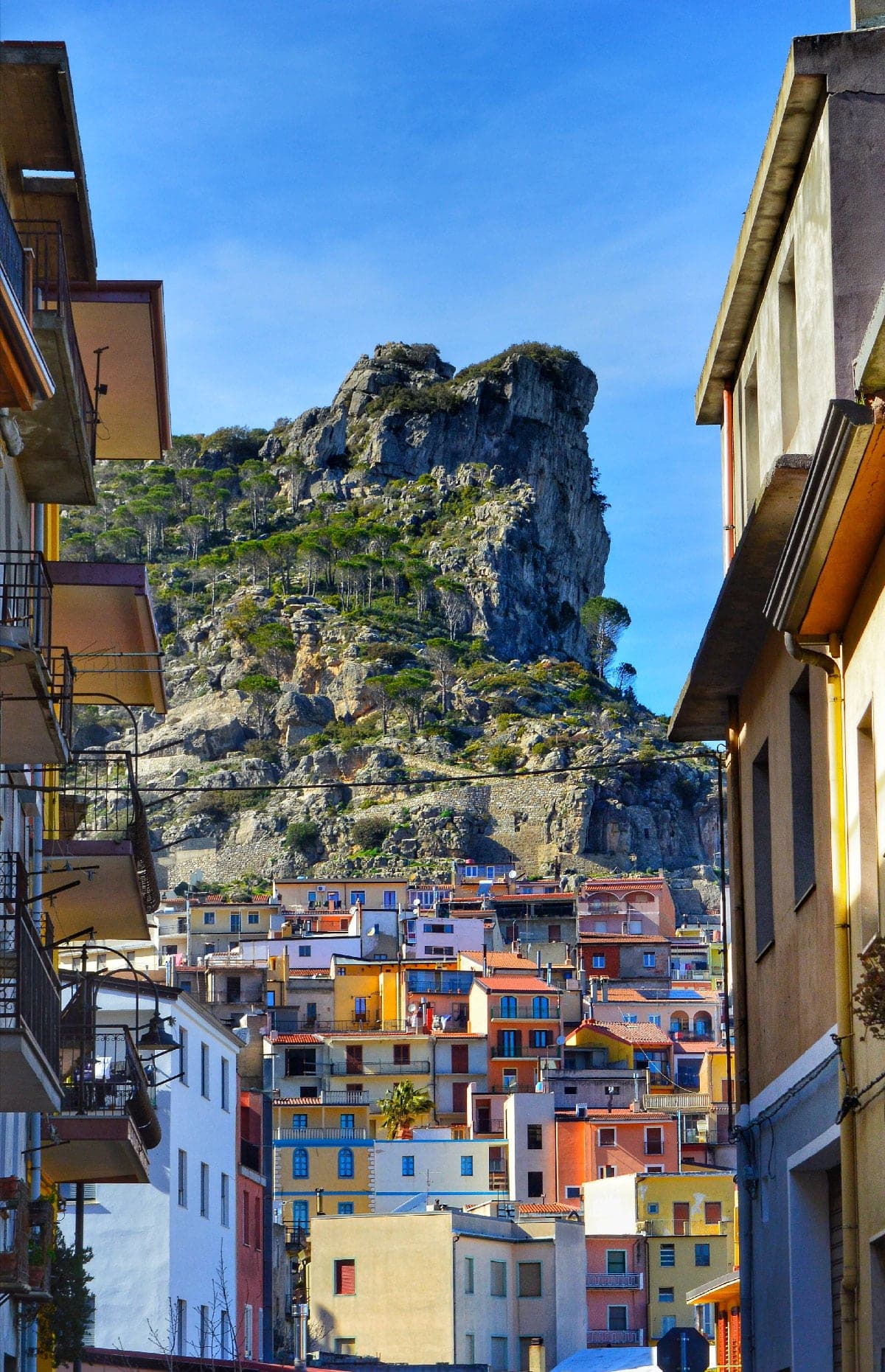
The villages of Ogliastra worth visiting: Jerzu, Ulassai, Baunei and more
by Roberto Demurtas · Host of Villa Pelau · updated on 14 July 2026
The villages of Ogliastra told by a local: Jerzu and its Cannonau, Ulassai and Maria Lai, the ghost towns of Osini and Gairo, and the sea.
Ogliastra is made of villages: towns of a few thousand people clinging to the limestone Tacchi, facing the sea or rebuilt after the wounds of history. They're the most authentic part of this land — the part you miss if you stay on the beach — and visiting them is the key to understanding why life here moves at a different pace.
I live in Pelau, in the countryside around Jerzu, and these are the villages of Ogliastra I recommend to my guests, in the order I'd tell a friend about them: all reachable in 10–25 minutes by car from the villa.
The villages at a glance — distances from Villa Pelau
- Bari Sardo
- 10 minutes — sea and Torre di Barì
- Jerzu
- 15 minutes — the town of Cannonau
- Gairo
- 18 minutes — the ghost town
- Tortolì and Arbatax
- 18 minutes — the main hub
- Ulassai
- 20 minutes — art, caves and the Tacchi
- Santa Maria Navarrese
- 20 minutes — the seaside village
- Osini
- 25 minutes — nuraghi and the old village
- Baunei
- 25 minutes — the balcony over Ogliastra
Jerzu, the town of Cannonau
I'll start from home: Villa Pelau sits in the Pelau valley, in the countryside around Jerzu, and the short scenic road up to the town runs alongside the Valle del Pardu, crossed by the Pelau river and lined with vineyards. It's the perfect introduction to a village with a very strong winemaking tradition: on its hills grow historic vineyards that produce above all Cannonau, Sardinia's great red wine.
In Jerzu, wine is a community affair. Many small producers tend their own cellars and often open their doors for guided visits and tastings; the Antichi Poderi cooperative winery, founded in 1950 and today the operation bringing together the largest number of winegrowers in the area — hundreds of members across roughly 500 hectares of vineyards — can also be visited, with tastings of the Cannonau from the Jerzu subzone.
The village sits at the foot of the Tacchi, and 10 minutes from the centre their limestone walls are a favourite destination for hikers and climbers: I've covered them in the Ogliastra climbing guide.
Ulassai, where the mountain enters the village
5 minutes from the centre of Jerzu (20 from the villa), Ulassai is the village where the Tacchi aren't just a backdrop: they literally merge with the houses and streets, creating a scene that leaves first-time visitors speechless. It's a small village with an unusual density of things to see: the art of Maria Lai, born here, who left behind the Stazione dell'Arte and the open-air works, the majestic Su Marmuri caves, among the largest in Europe, and the crags and trails that make it a Sardinian capital of climbing and hiking.
If you only have one day for the inland, this is probably where I'd send you.
Osini and its old village
The third village at the foot of the Tacchi is also the smallest, but it has nothing to envy the others when it comes to history and charm. 25 minutes from the villa, Osini holds some of the most remarkable sights of inland Ogliastra: nuraghe Serbissi, among the best preserved in Sardinia, and the spectacular Scala di San Giorgio, the rock gorge you drive straight through — routes and details are also in the hiking guide.
A minute from the village, the ruins of Osini Vecchio tell the most dramatic chapter in this valley's recent history: the original village was abandoned after being struck by the 1951 flood, and its empty houses can be visited today in a silence that's genuinely moving.
Gairo, the rebuilt village
The same flood of October 1951 — days and days of relentless rain over the Rio Pardu valley — also marked Gairo forever, 18 minutes from the villa. The present-day village was rebuilt higher up, above the ruins of Gairo Vecchio, today Sardinia's most famous ghost town: abandoned streets and houses clinging to the slope, to be explored with respect and a camera in hand. Those who lost their homes partly moved into the new village and partly came down to the valley, where the town of Cardedu would later be founded.
There's another reason Gairo's name should sound familiar: within its territory, far from the centre, lies Su Sirboni, one of Ogliastra's most beautiful and wild beaches — you'll find it in the beaches guide.
Tortolì and Arbatax, the beating heart
Tortolì, 18 minutes from the villa, is Ogliastra's main hub, and its territory has three distinct souls. Tortolì's town centre is the right place for shopping: shops, local products, local crafts. Porto Frailis is the busiest tourist area, gathered around its famous bay. Arbatax is the most historic part: the hub of Ogliastra's trade thanks to its harbour, famous for the Rocce Rosse and one of the departure points for boat trips to the coves of the Baunei coast.
5 minutes from the centre (15 from the villa) stretches one of the most beautiful coastal areas around, from Lido di Orrì all the way to the beach at Cea: full details in the beaches guide.
Santa Maria Navarrese and Baunei, the two lookouts
I'll tell you about these two together because they're linked — Santa Maria Navarrese is a hamlet of Baunei — and because they're probably the two most beautiful villages in Ogliastra. Santa Maria Navarrese (20 minutes) sits by the sea, grown up around a small church from the year 1000 that, tradition says, was built at the wish of a princess of Navarre, shipwrecked on these shores — hence the name. In the square beside the church, thousand-year-old wild olive trees still stand. On summer nights it becomes a proper seaside village, with bars and a lively seafront promenade, and boat trips to Sardinia's most famous coves depart from its little harbour.
Baunei (25 minutes) instead sits high up, clinging to the mountain overlooking all of Ogliastra with a breathtaking view of the gulf. It's the gateway to the coastal Supramonte and the Golgo plateau, starting point for some of the island's most spectacular hikes: you'll find them in the Ogliastra hiking guide.
Bari Sardo, sea and tradition
The village closest to the villa: 10 minutes, exactly halfway to Tortolì. Bari Sardo is a seaside town, and its main beach is dominated by the Torre di Barì, a coastal watchtower of Spanish origin built at the end of the 16th century on a small headland that splits a very long stretch of sand in two. In summer the village often comes alive with fairs and festivals: a great place to get a taste of local tradition and enjoy a wonderful beach in the same afternoon.
Fairs and festivals: when the villages open up
There's one last piece of advice I always give my guests: check the festival calendar. Especially in summer, late spring and early autumn, these villages host traditional fairs and festivals where you can get up close with Ogliastra's traditions, costumes and flavours — from folk groups in traditional dress to private cellars opening their doors, from culurgiones made in the square to Cannonau poured straight from the producers.
The most famous example is right at home: in early August Jerzu celebrates wine with the historic Sagra del Vino and Calici di Stelle, a week of tastings in the cellars of the old town, folk parades and concerts. But almost every village has its own festival: if you find one during your stay, go — it's the truest way to meet this land.
From Villa Pelau you're in the ideal position to explore them all: the villa sits right at the centre between the villages of the Tacchi and those of the sea, and none of the places in this article is more than 25 minutes away. A different village every evening, and a return to the quiet of the countryside.
Frequently asked questions
What's the most beautiful village in Ogliastra?+
Santa Maria Navarrese and Baunei are probably the most scenic — one on the sea, the other high up overlooking the coast. But it depends what you're after: Jerzu for wine, Ulassai for art, the ghost towns of Gairo and Osini for history.
What are Ogliastra's ghost towns?+
Gairo Vecchio and Osini Vecchio, two villages abandoned after the disastrous flood of October 1951. The ruins are freely accessible and among the most striking places on the island.
When is the best time to visit the villages of Ogliastra?+
In summer, late spring and early autumn the villages host traditional fairs and festivals: it's the best time to get close to local customs, traditions and flavours. Outside season you can visit them at a completely relaxed pace.
Can you visit the wine cellars in Jerzu?+
Yes: many small producers open their cellars for guided visits and tastings, and the Antichi Poderi cooperative winery, the largest, can also be visited. Booking is recommended.

Roberto Demurtas
Host of Villa Pelau
Sono nato e cresciuto in Ogliastra. Con Villa Pelau accolgo chi vuole scoprire questa terra, e in questa guida racconto i posti che frequento da sempre.
Sleep just minutes away
Villa Pelau sits among the vineyards of Jerzu, just minutes away: a fenced garden, private jacuzzi, and the perfect base to experience Ogliastra like a local.
Discover Villa Pelau